Blackjack Strategies Rooted in Mathematics: Practical Tips for Informed Play
Amir Washington · Jul 12, 2026
Blackjack Strategies Rooted in Mathematics: Practical Tips for Informed Play
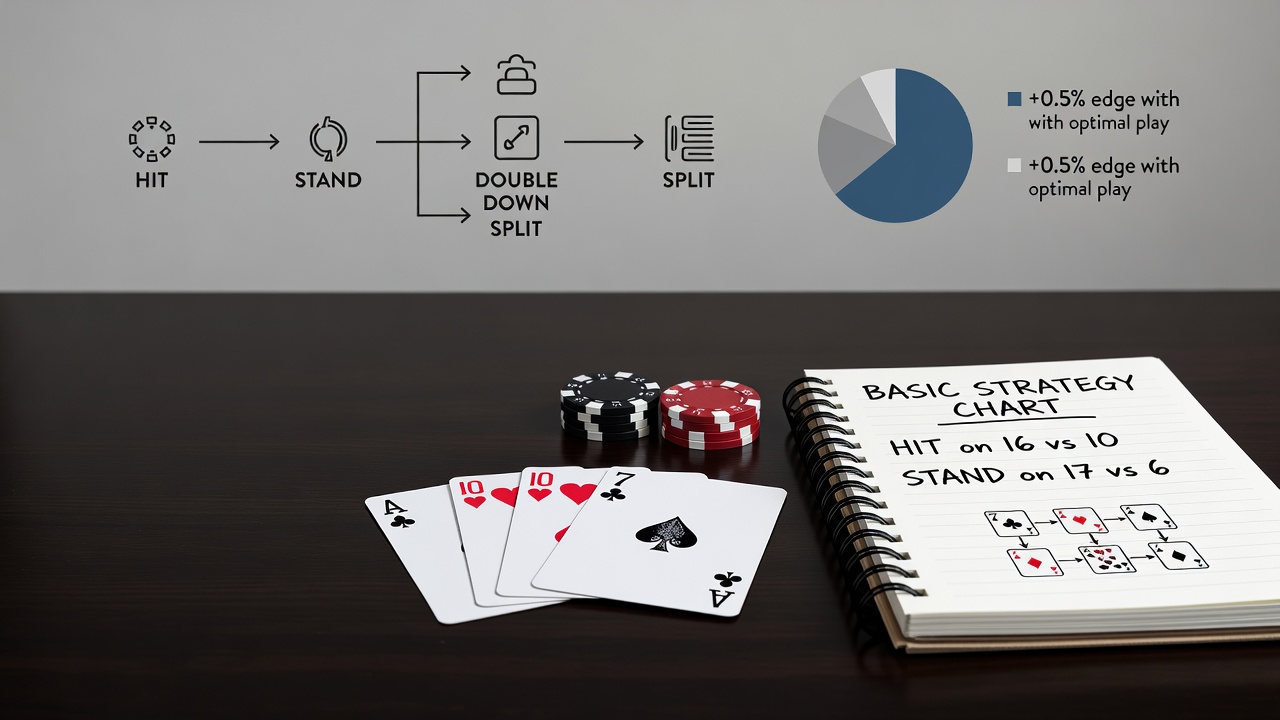
Blackjack remains one of the few casino games where player decisions directly influence outcomes, and data from probability studies confirm that structured approaches can reduce the house edge to under one percent when applied consistently. Researchers at institutions like the University of Nevada have documented how basic strategy charts derive from millions of simulated hands, mapping every possible player total against dealer upcards to minimize expected losses over time. Those charts prioritize actions such as hitting on soft 17 against a dealer 10, splitting eights against any dealer card, and doubling down on eleven regardless of the dealer’s showing, because these moves align with long-term mathematical expectations rather than intuition.
Core Elements of Basic Strategy
Basic strategy forms the foundation because it accounts for the specific rules in play, including the number of decks and whether doubling after split is allowed. Analysts note that single-deck games with favorable rules can drop the house edge to 0.2 percent when players follow the chart exactly, whereas multi-deck variants typically hover around 0.5 percent. Players often start by memorizing hard totals first, then move to soft hands and pairs, because the decision tree grows more complex once aces enter the equation. Software simulations released in early 2025 by independent testing labs demonstrate that deviations from these charts increase the house advantage by measurable margins, sometimes doubling it within a few hundred hands.
Card Counting Fundamentals and Limitations
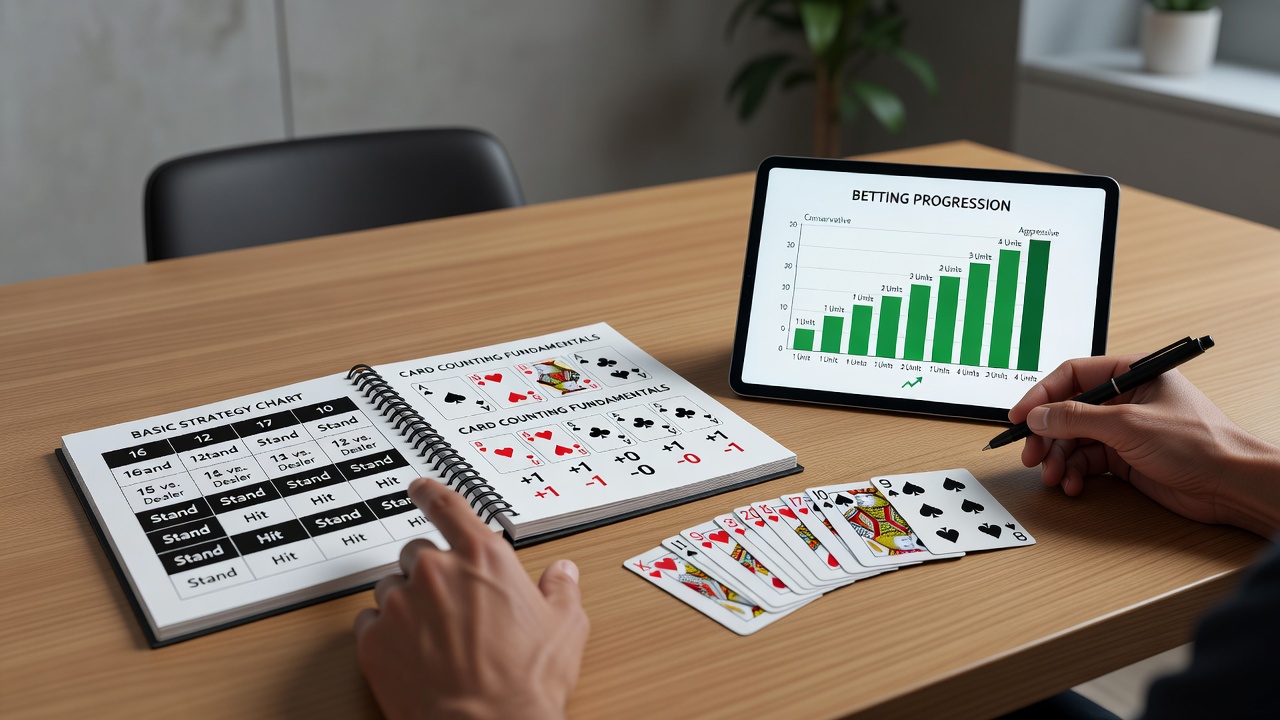
Card counting builds on basic strategy by tracking the ratio of high to low cards remaining in the shoe, giving players a temporary edge when the count turns positive. The Hi-Lo system assigns plus-one values to twos through sixes and minus-one to tens through aces, with the running count converted to a true count by dividing by remaining decks. Studies published by the American Gaming Association indicate that professional teams using this method have achieved sustained advantages of one to two percent in controlled environments, yet casino countermeasures such as frequent shuffles and table minimum adjustments have reduced the practical yield for most individuals. As of July 2026, several Nevada properties introduced automated shuffle machines at higher-limit tables, shortening the window during which a favorable count can develop.
Observers emphasize that counting requires substantial bankroll reserves and emotional discipline, since variance can produce extended losing streaks even with a mathematical edge. Data from long-term tracking by independent researchers shows that fewer than five percent of dedicated counters maintain profitability after accounting for travel, comps, and detection risks.
Bankroll Management and Session Planning
Effective bankroll management prevents rapid depletion during downswings, and guidelines from gaming research organizations recommend allocating at least 100 times the minimum bet for basic strategy play or 300 to 500 times for counted sessions. Those who apply the Kelly criterion adjust wager sizes proportionally to the current edge, capping bets at a fraction of total capital to avoid ruin. Figures from Canadian regulatory reports reveal that players who ignore these ratios experience average session losses exceeding 40 percent of their starting amount within the first hour when variance spikes. Setting win and loss limits before sitting down further structures play, with many experienced participants exiting after a 50 percent gain or a 25 percent drop to preserve capital for future opportunities.
Rule Variations and Their Impact
Rule differences across venues alter expected returns in ways that compound over thousands of hands. Games offering late surrender reduce the house edge by roughly 0.08 percent according to calculations from Australian gambling research centers, while restrictions on doubling or resplitting increase it. Players who compare tables before committing funds can identify conditions that favor their preferred strategy, such as those allowing double after split or paying 3:2 on natural blackjacks rather than 6:5. European-style games that deal the dealer’s second card face down until players finish their hands introduce additional strategic adjustments, particularly around insurance and even-money decisions when holding a blackjack.
Practical Tips Derived from Observed Patterns
Participants who track their results over time discover that avoiding side bets such as Perfect Pairs or 21+3 preserves the overall edge, since these wagers carry house advantages between 2 and 10 percent. Maintaining consistent bet spreads rather than erratic jumps also helps avoid detection in counted games, while positioning at third base allows slightly more information about preceding player decisions. Regular breaks every 60 to 90 minutes reduce fatigue-related errors, and reviewing strategy charts between sessions reinforces recall without relying on memory alone.
Conclusion
Blackjack strategies succeed when they integrate probability tables, disciplined counting where feasible, and strict financial controls rather than relying on streaks or hunches. Evidence from multiple regulatory jurisdictions and academic simulations continues to show that adherence to these principles narrows the gap between player and house over extended play, even as individual outcomes remain subject to variance. Those who treat the game as a series of informed decisions rather than entertainment expenses position themselves to capture the small advantages the mathematics occasionally provides.