Blackjack Strategy for Beginners: Core Principles and Practical Applications
Ines Peters · Aug 21, 2026
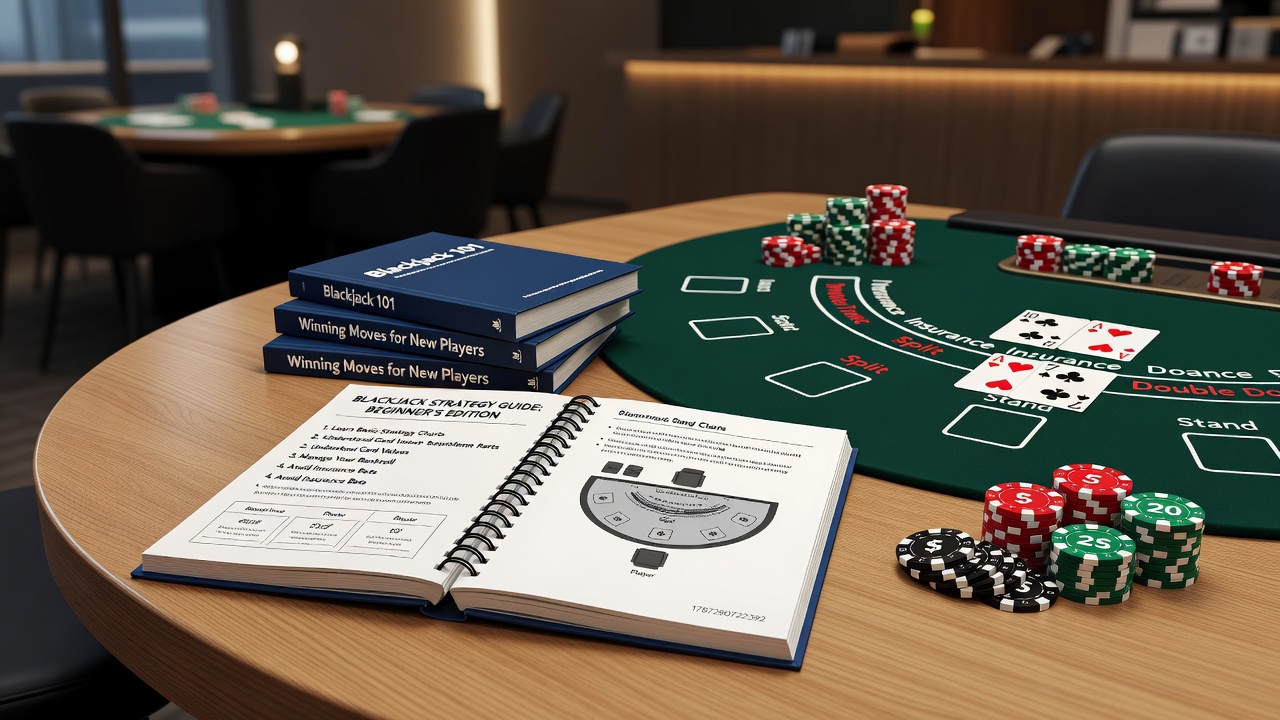
Blackjack Strategy for Beginners: Core Principles and Practical Applications
Blackjack remains one of the few casino games where player decisions directly influence outcomes, and strategy guides for beginners focus on reducing the house edge through consistent choices. Researchers at institutions like the University of Nevada have documented how basic strategy tables cut the house advantage to under one percent when followed precisely. These guides emphasize learning the rules first because variations in dealer hitting on soft 17 or the number of decks alter optimal plays.
Beginners often start with single-deck or double-deck games to grasp fundamentals before moving to multi-deck tables common in most casinos. Data from the Nevada Gaming Control Board shows that tables with favorable rules attract more recreational players each year, and guides translate these rules into simple charts that list every hand combination against the dealer's upcard.
Understanding Basic Strategy Charts
Basic strategy charts organize decisions into categories such as hit, stand, double down, and split, and beginners benefit from memorizing them through repetition rather than intuition. One study from the University of Las Vegas revealed that players who practice with these charts for several hours reduce errors significantly compared to those relying on gut feelings. Charts account for the total number of decks in play, so users check the rules at their chosen table before applying the information.
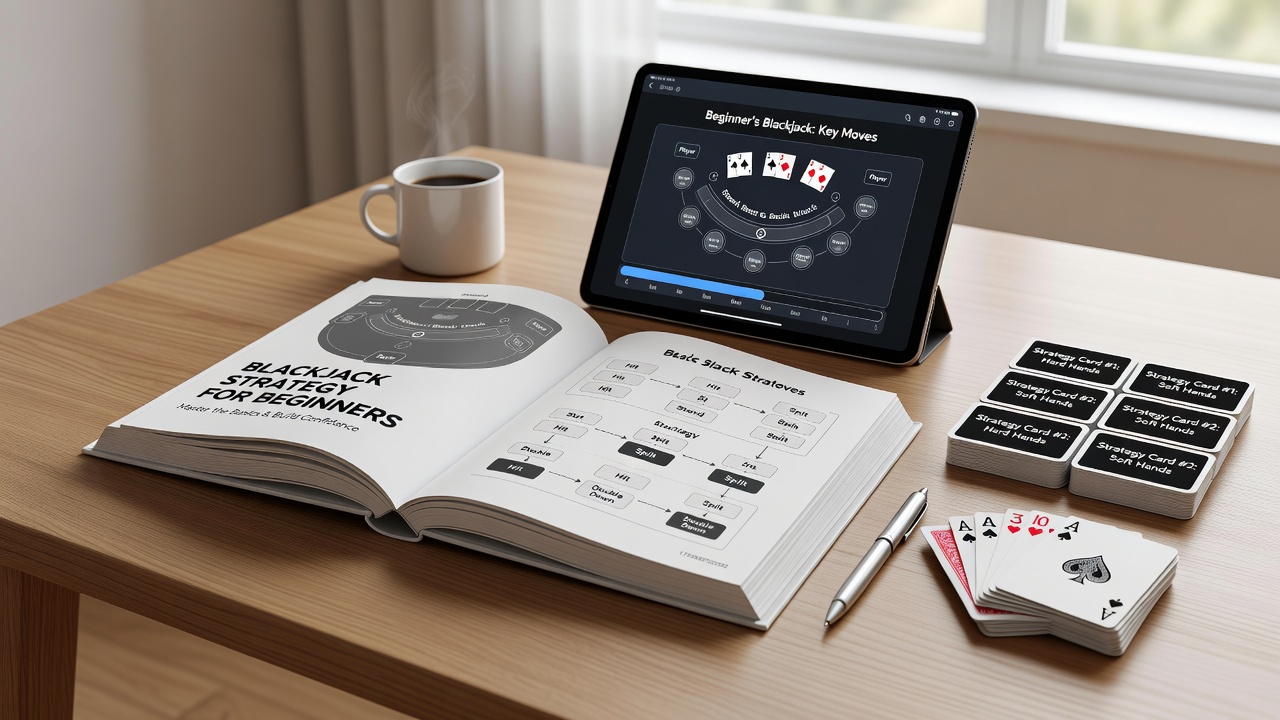
Guides typically break the chart into sections for hard totals, soft totals, and pairs, while they highlight exceptions that arise in games where the dealer stands on all 17s versus those where the dealer hits soft 17. Observers note that beginners who print or save digital versions of these charts consult them during practice sessions until the responses become automatic.
Key Decisions: Hitting, Standing, Doubling, and Splitting
Players face a dealer upcard between two and ace, and strategy dictates specific actions based on the player's two cards. For example, a player holding 16 against a dealer 10 should hit in most multi-deck games, while the same 16 against a dealer 6 calls for standing because the probability favors the dealer busting. Guides present these choices in grid format so users locate their hand quickly and follow the recommended action.
Doubling down occurs when players receive favorable totals such as 10 or 11 against lower dealer cards, and splitting pairs follows rules that prevent splitting fives or tens while encouraging splits on eights and aces. Those who've studied probability models confirm that following these patterns consistently improves long-term results even though individual rounds remain unpredictable.
Bankroll Management and Session Planning
Strategy extends beyond hand decisions to include how much to wager relative to total funds available, and guides recommend betting no more than one to two percent of a bankroll on any single hand. Research from Canadian gaming studies indicates that players who set loss limits before sitting down maintain longer sessions and avoid chasing losses. Beginners learn to track wins and losses in writing during practice so they recognize patterns in their own behavior.
Guides also cover when to leave a table, noting that streaks do not alter the mathematical edge but emotional decisions often do. People who apply these guidelines report steadier play because they separate the mechanics of each hand from overall financial targets.
Common Pitfalls and How Guides Address Them
Many beginners mistakenly take insurance bets or follow hunches on borderline hands such as 12 against a dealer 2, and strategy guides explicitly label these as negative expectation plays. Data compiled by gaming research groups shows that insurance raises the house edge above two percent when used incorrectly. Guides therefore include warnings alongside the main chart and provide simplified versions for quick reference at the table.
Another frequent issue involves misunderstanding soft hands, where an ace counts as eleven, and guides dedicate separate columns to these totals to prevent costly errors. Those who review examples repeatedly find the distinctions become clearer over time.
Practice Methods Recommended in Modern Guides
Digital simulators and mobile applications allow beginners to drill basic strategy without financial risk, and many resources update their content to reflect rule changes observed across different regions. Academic papers on gambling behavior suggest that spaced repetition improves retention compared to cramming, so guides often include daily practice schedules lasting fifteen to twenty minutes. Players can track accuracy percentages within these tools and focus on weak areas until performance stabilizes.
Live observation at low-stakes tables also helps because beginners see how dealers handle cards and how other players react, though they avoid copying actions that deviate from the chart. Guides stress that watching alone does not replace active practice with feedback.
Conclusion
Strategy guides for beginners provide structured frameworks that translate probability into actionable decisions at the blackjack table. When combined with bankroll discipline and regular practice, these resources equip new players with tools that narrow the gap between theoretical advantage and real-world results. Continued reference to updated charts ensures alignment with specific game rules encountered in different venues.