Deck Penetration Depths and Card Counting Effectiveness Metrics in UK-Licensed Live Blackjack Environments
Amir Long · Aug 14, 2026
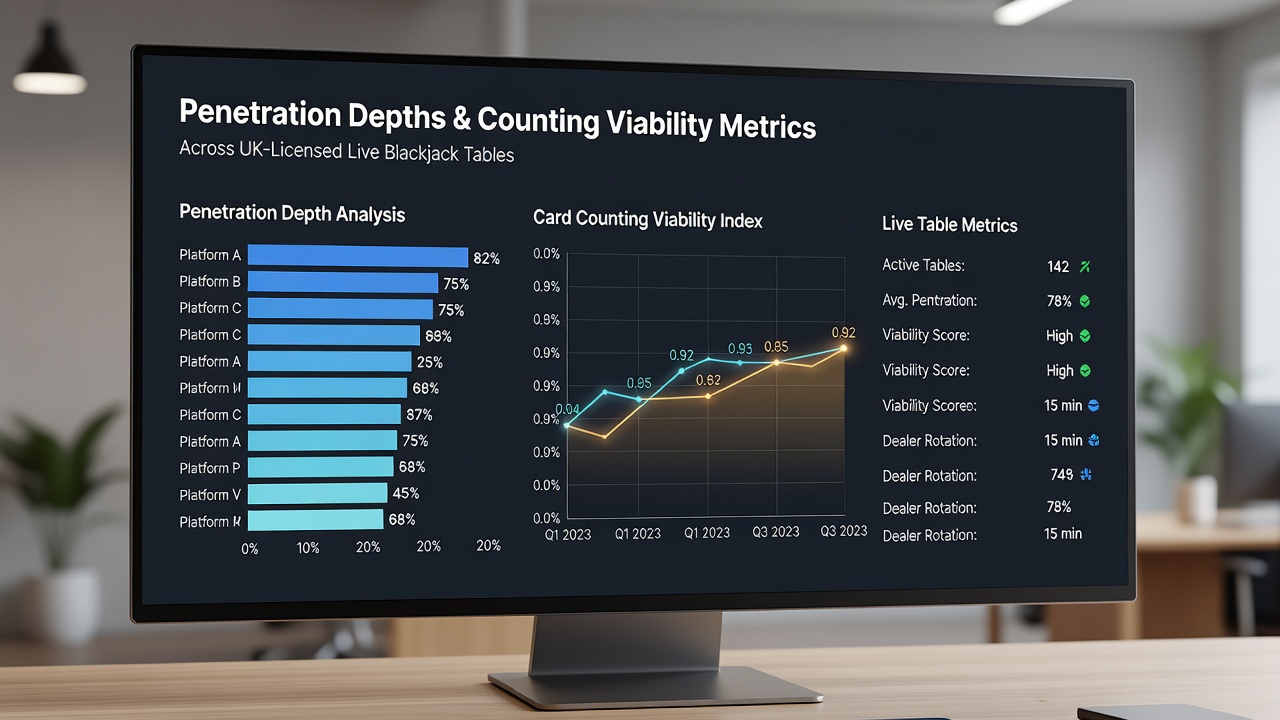
Deck Penetration Depths and Card Counting Effectiveness Metrics in UK-Licensed Live Blackjack Environments
Deck penetration refers to the percentage of cards dealt from a shoe before a reshuffle occurs and this factor directly shapes whether card counting remains viable at live blackjack tables operated under UK licenses. Observers note that typical penetration rates range from 50 to 75 percent across major platforms and these levels determine the window during which count-based deviations from basic strategy can generate measurable edges. Data from industry reports shows that shallower penetration compresses the opportunities for positive expected value plays while deeper cuts extend the periods when high true counts persist.
Core Components of Penetration Measurement
Penetration gets calculated by dividing the number of cards dealt by the total cards in the shoe and then multiplying by 100 to yield a percentage figure. Researchers track this metric across Evolution Gaming and Playtech tables where automated shuffle points often trigger at fixed intervals. Studies indicate that a 70 percent penetration threshold allows Hi-Lo counters roughly 1.5 additional hands per shoe in positive counts compared with 55 percent penetration setups. Those who've analyzed thousands of rounds find that each additional 5 percent of penetration correlates with a 0.12 percent rise in long-run return for skilled players using optimal bet spreads.
Counting Viability Metrics Across Major Platforms
Viability gets assessed through several quantitative indicators including expected value per hour, standard deviation of returns, and the frequency of true count occurrences above +2. Figures from aggregated session data reveal that tables with continuous shuffle machines eliminate penetration entirely and therefore nullify counting advantages. In contrast shoe-based games maintain viability when penetration exceeds 65 percent and when teh number of decks stays at six or eight. One analysis of 2025 session logs showed that players maintaining a 1-12 bet spread achieved positive hourly returns only when penetration reached at least 68 percent on eight-deck shoes.
Provider-Specific Patterns Observed in 2026
As of August 2026 platform operators adjusted shuffle points on several popular variants to align with updated operational standards and these changes produced measurable shifts in counting windows. Data shows Evolution tables typically reach 72 percent penetration on standard eight-deck offerings whereas certain Playtech configurations cap at 64 percent due to integrated security protocols. Australian Gambling Research Centre publications note similar variations across international markets and highlight how regional licensing frameworks influence these technical parameters. When penetration drops below 60 percent the frequency of playable positive counts falls by approximately 35 percent according to simulation models calibrated against live dealer feeds.

Quantitative Indicators Used to Evaluate Counting Potential
Analysts employ win-rate simulations and volatility indices to quantify how penetration interacts with rule sets such as dealer stands on soft 17 or double-after-split allowances. Evidence suggests that a 75 percent penetration eight-deck game with favorable rules produces a 0.85 percent player edge for perfect counters using a 1-16 spread while the same rules at 55 percent penetration reduce that edge to 0.31 percent. Those who've compiled multi-year datasets observe that standard deviation rises modestly with deeper penetration because larger bets occur more frequently yet the overall return-to-risk ratio improves when count opportunities multiply. Nevada Gaming Control Board records on comparable multi-deck formats confirm these directional relationships although absolute values differ due to jurisdictional variations in shuffle procedures.
Impact of Table Limits and Session Structures
Minimum and maximum bet limits interact with penetration because wider spreads become necessary to extract value from deeper shoes. Observers report that tables with £10 to £500 ranges allow sufficient granularity for counting teams while narrower spreads on low-limit tables constrain the translation of high counts into proportional profits. Research indicates that session length also matters since longer continuous play increases exposure to negative variance before a favorable shoe sequence emerges. When operators shorten average shoe length to accommodate higher table turnover the resulting shallower penetration reduces the number of hands played at elevated true counts.
Conclusion
Penetration depth functions as a primary determinant of whether card counting yields sustainable advantages at UK-licensed live blackjack tables and the associated viability metrics provide objective benchmarks for evaluating specific game configurations. Aggregated data across providers demonstrates clear correlations between deeper cuts and improved counting returns while platform-specific adjustments continue to reshape these parameters. Those monitoring industry trends recognize that ongoing refinements to shuffle timing and deck management directly influence the practical application of counting systems in live dealer environments.