Inside Certification Labs: Unpacking the Verification of Shuffle Algorithms for Blackjack Software Compliance
Ines Peters · Jul 7, 2026
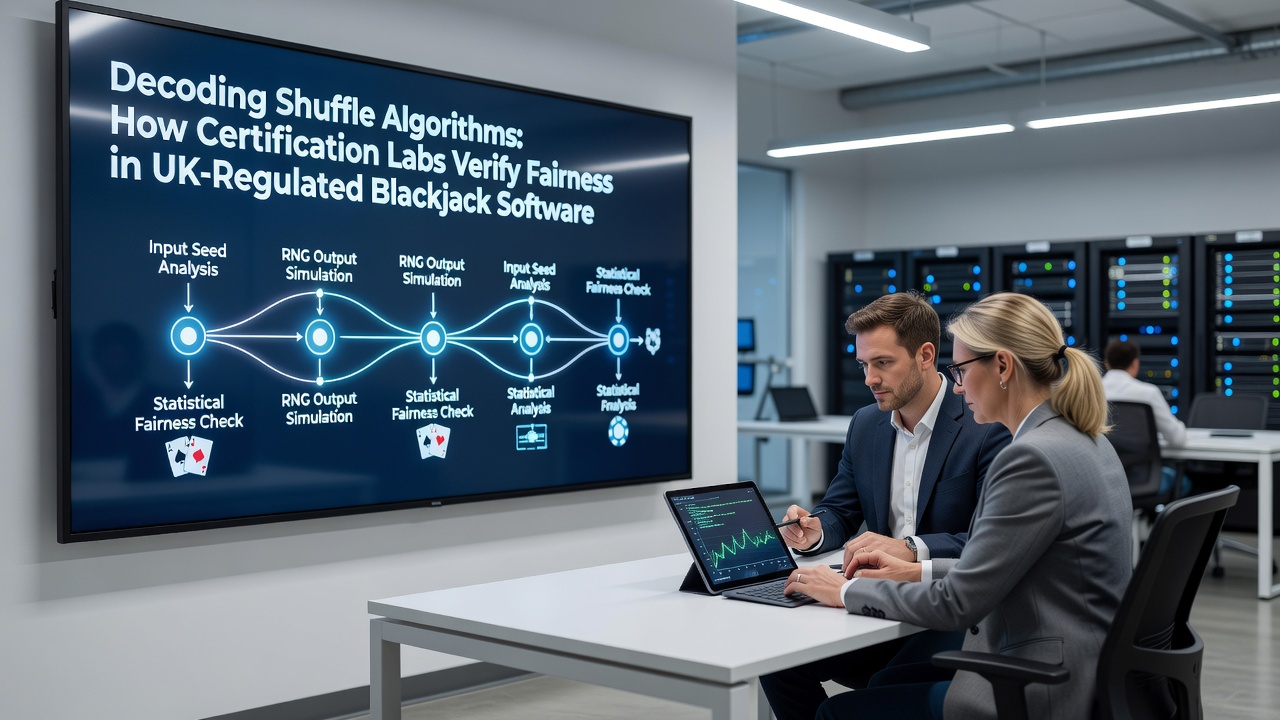
Inside Certification Labs: Unpacking the Verification of Shuffle Algorithms for Blackjack Software Compliance
Certification labs operate as independent gatekeepers that examine the mathematical foundations of shuffle algorithms embedded in blackjack software, and they apply rigorous statistical protocols to confirm that card distribution remains unpredictable across thousands of simulated hands. These facilities evaluate both pseudorandom number generators and true random sources, checking whether each shuffle sequence adheres to uniform probability distributions while resisting patterns that could emerge from flawed coding or hardware limitations.
Core Components of Modern Shuffle Algorithms
Blackjack platforms rely on algorithms that rearrange virtual decks through repeated transposition steps, and certification teams first isolate the underlying random number generator to measure entropy levels before any shuffling occurs. Researchers map the generator output against established benchmarks such as the NIST Statistical Test Suite, which includes assessments for frequency, runs, and serial correlation, while labs also examine how the algorithm handles deck penetration and reshuffle triggers during live play sessions.
Developers often implement variants of the Fisher-Yates shuffle adapted for finite decks, yet certification requires proof that each permutation carries equal likelihood regardless of previous outcomes. Observers note that even minor implementation errors, such as biased swap selection or insufficient iteration counts, can introduce detectable skews that surface only after millions of test cycles.
Testing Protocols Employed by Accredited Facilities
Once source code and compiled binaries arrive at a lab, analysts compile detailed test plans that combine static code review with dynamic execution under controlled loads, and they record every random seed, intermediate state, and final deck order for later statistical scrutiny. Multiple independent runs occur across different hardware platforms to rule out environment-specific artifacts, after which chi-square and Kolmogorov-Smirnov tests quantify deviations from theoretical expectations.
Additional layers include collision analysis that searches for repeated deck sequences within large sample sets, along with period-length verification to ensure the generator cycle exceeds practical session volumes. Labs also simulate regulatory stress conditions such as rapid successive shuffles and interrupted game states to confirm that fairness metrics remain stable.

Regulatory Alignment and Cross-Border Standards
Although requirements differ by jurisdiction, certification reports frequently reference frameworks from the Nevada Gaming Control Board and the Gaming Laboratories International guidelines, which both emphasize continuous monitoring capabilities alongside initial approval testing. European testing houses apply comparable procedures under the Malta Gaming Authority framework, creating a de facto harmonized approach that many operators adopt even when local rules allow flexibility.
Documentation submitted to regulators includes raw test data, methodology descriptions, and pass-fail thresholds, and these records become part of the software's ongoing compliance file. Updates to the random number generator or shuffle logic trigger fresh evaluations rather than relying on prior certifications, ensuring that incremental code changes do not silently degrade randomness quality.
Developments Expected Through Mid-2026
Industry reports indicate that several certification bodies plan to release updated testing suites in July 2026 that incorporate machine-learning-assisted anomaly detection alongside traditional statistical batteries, and these enhancements aim to identify subtle correlations that older methods might overlook. Pilot programs already underway at select facilities demonstrate reduced false-positive rates while maintaining sensitivity to genuine bias, suggesting the new protocols will integrate smoothly into existing workflows.
Software providers are preparing by embedding additional logging hooks that expose internal generator states without compromising security, allowing auditors to conduct deeper forensic reviews when required. This shift reflects broader trends toward proactive verification rather than reactive audits triggered by player complaints.
Conclusion
Certification labs continue to serve as essential intermediaries that translate complex algorithmic behavior into verifiable compliance metrics, and their work underpins player confidence in regulated blackjack environments across multiple markets. As testing methodologies evolve to address emerging computational capabilities, the core objective remains unchanged: confirming that every shuffle delivers the fairness characteristics demanded by both regulators and participants.