Interplay of Progressive Jackpot Layers with Blackjack Payout Structures in Regulated Environments
Viktor Peters · Aug 9, 2026
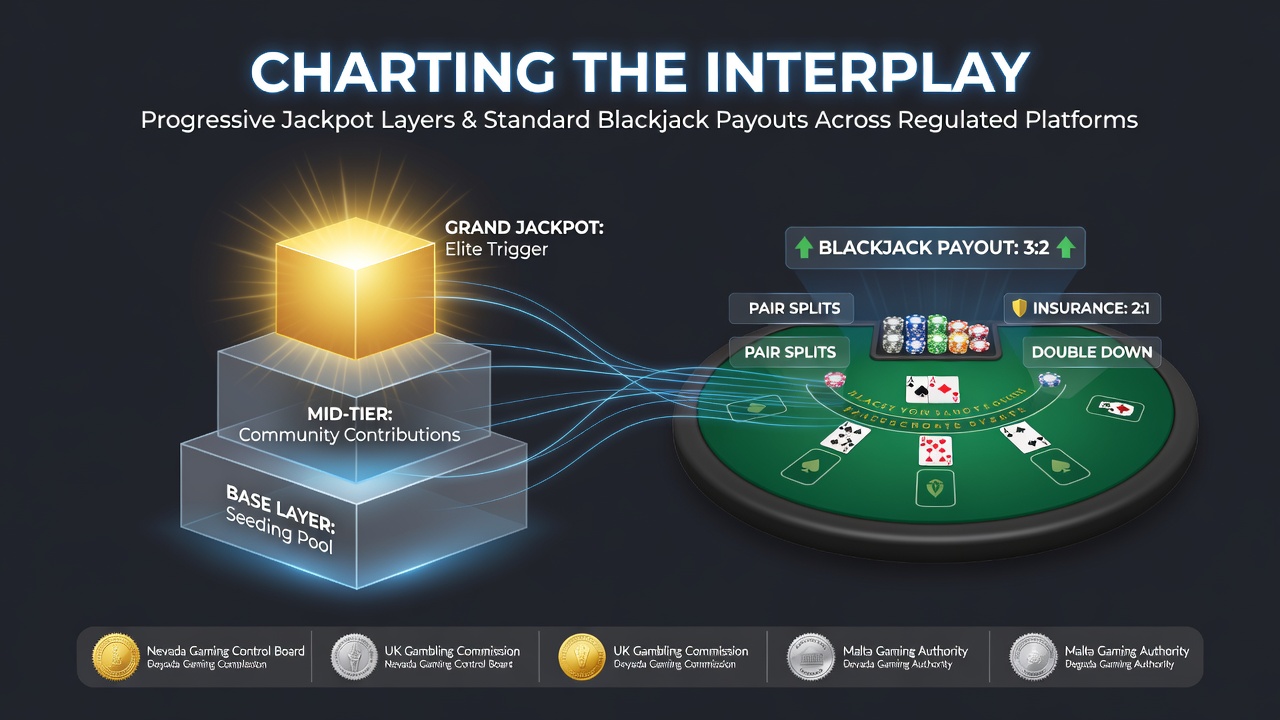
Interplay of Progressive Jackpot Layers with Blackjack Payout Structures in Regulated Environments
Progressive jackpot layers in blackjack operate through dedicated side bets that feed into accumulating prize pools while standard payout structures such as three-to-two returns on natural blackjacks or one-to-one on even-money hands remain fixed on the base game. Platforms licensed in multiple jurisdictions integrate these layers by allocating a small percentage of each side bet contribution to the progressive meter and the balance to the operator's revenue share.
Mechanics of Side Bet Funding and Meter Growth
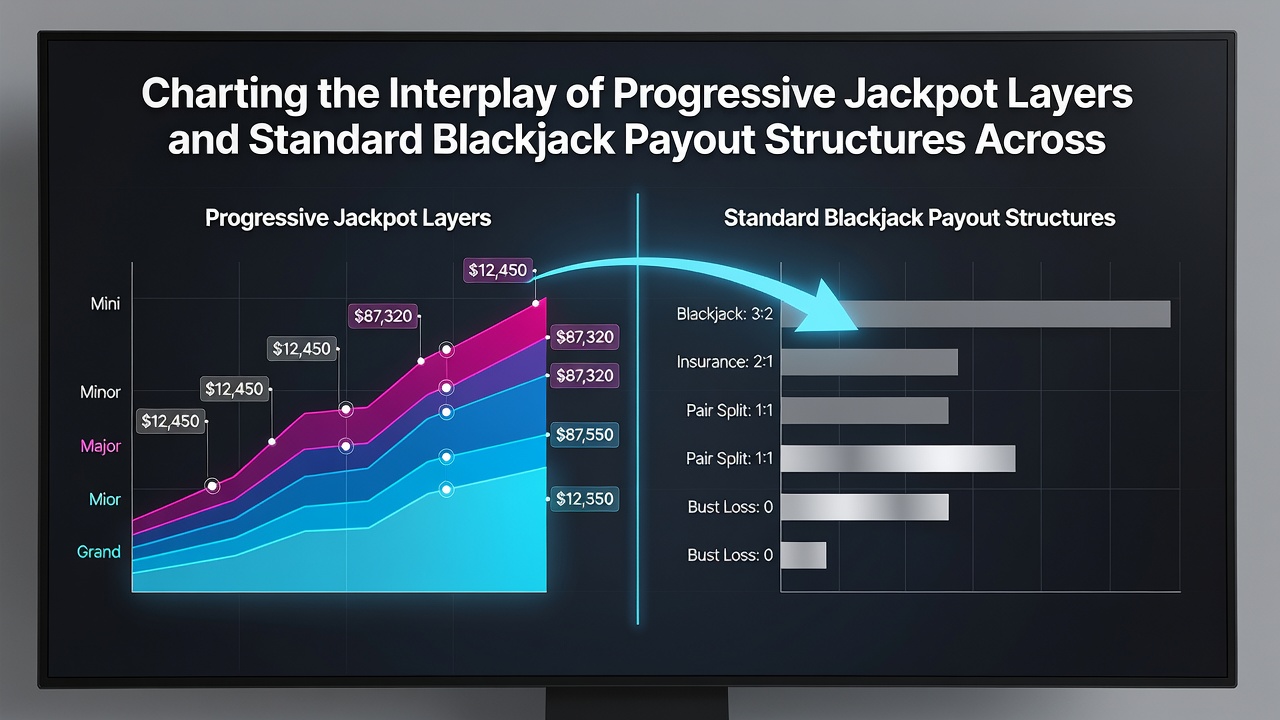
Side bets like Perfect Pairs or 21+3 typically contribute between one and five percent of their wager amount to the progressive pool depending on the specific game variant and licensing requirements. Data compiled from platform operators indicate that meter growth accelerates when player volume increases during peak hours and that resets occur automatically once a jackpot hits the threshold set by the game provider. Researchers tracking these systems note that meters on multi-site networks accumulate faster than single-site versions because contributions draw from a wider player base across connected venues.
Impact on Standard Payout Calculations
Standard blackjack payouts stay unchanged by the progressive layer because the side bet sits outside the core hand resolution; a player still receives three-to-two for a natural twenty-one on the main bet even while the progressive meter continues to climb from separate wagers. Observers have recorded that return-to-player percentages for the base game hold steady at approximately ninety-nine point five percent on tables using three-to-two payouts whereas the side bet RTP varies widely from ninety-two to ninety-eight percent once the progressive contribution is factored in. Studies from academic gaming research centers show that players who combine both elements experience an overall RTP that shifts with jackpot size because the progressive component carries a higher variance component.
Regulatory Frameworks Across Jurisdictions
Licensed operators in Nevada must submit progressive jackpot configurations for approval by the Nevada Gaming Control Board before deployment and similar approval processes exist under the Malta Gaming Authority for European platforms. These reviews verify that the random number generators driving jackpot triggers meet certified fairness standards and that payout tables clearly separate base game odds from progressive contributions. Reports issued in August 2026 by industry monitoring groups highlighted that more than seventy percent of regulated blackjack variants now include at least one progressive option with average meter values ranging from fifty thousand to several million units depending on network size.
Player Behavior Patterns and Contribution Rates
Analytics from multiple platforms reveal that participation rates in progressive side bets peak when meters exceed one hundred thousand units and decline after a major payout resets the pool. Those who study session data find that average wager sizes on the side bet remain consistent at one to two dollars even as main bet sizes fluctuate with table limits. Experts tracking these trends note that the separation between base game and progressive layers allows players to adjust risk exposure independently without altering the fundamental blackjack strategy charts applied to the primary hand.
Technical Integration on Multi-Platform Networks
Software providers link progressive meters through centralized servers that poll contributions in real time and broadcast current values to all connected terminals. This architecture ensures synchronization across desktop and mobile clients while maintaining compliance logs required by each licensing body. Case examples from operators show that network latency stays below two hundred milliseconds even during high-traffic periods because the system processes only incremental updates rather than full recalculations on every spin.
Conclusion
Progressive jackpot layers coexist with standard blackjack payout structures by operating on distinct wager streams and regulatory oversight ensures transparent separation of these components. Platform data and compliance records continue to document steady adoption across licensed markets with meter values and contribution percentages remaining key variables tracked by operators and researchers alike.