Pair Power Plays: Crunching Numbers on Blackjack's Perfect Pairs Side Bet
Amir Long · Apr 12, 2026
Pair Power Plays: Crunching Numbers on Blackjack's Perfect Pairs Side Bet
Unpacking the Perfect Pairs Side Bet
Players at blackjack tables often spot that extra betting circle labeled "Perfect Pairs," a side wager that pays out based solely on the player's first two cards forming specific types of pairs, and while the main hand plays out as usual, this bet stands alone with its own resolution rules. Data from casino analytics shows this side bet gaining traction since its introduction in the mid-2000s by game developer Shuffle Master (now part of Scientific Games), appearing first in land-based venues before migrating online. Turns out, its simplicity draws in casual players who enjoy the thrill of an instant payout possibility, yet those who've analyzed the math reveal a house edge that varies widely depending on payout structures and deck configurations.
Here's where it gets interesting: the bet wins only if the initial two cards match in rank—regardless of the dealer's upcard or the hand's final outcome—and payouts scale with pair quality, from mixed suits up to identical suited twins. Observers note how casinos tweak these to balance appeal and profitability, with multi-deck shoes (common in six- or eight-deck games) slightly altering probabilities compared to single-deck setups. And as live dealer games proliferate online, Perfect Pairs integrates seamlessly, boosting table-side action without complicating core strategy.
Payout Structures and Probability Crunch
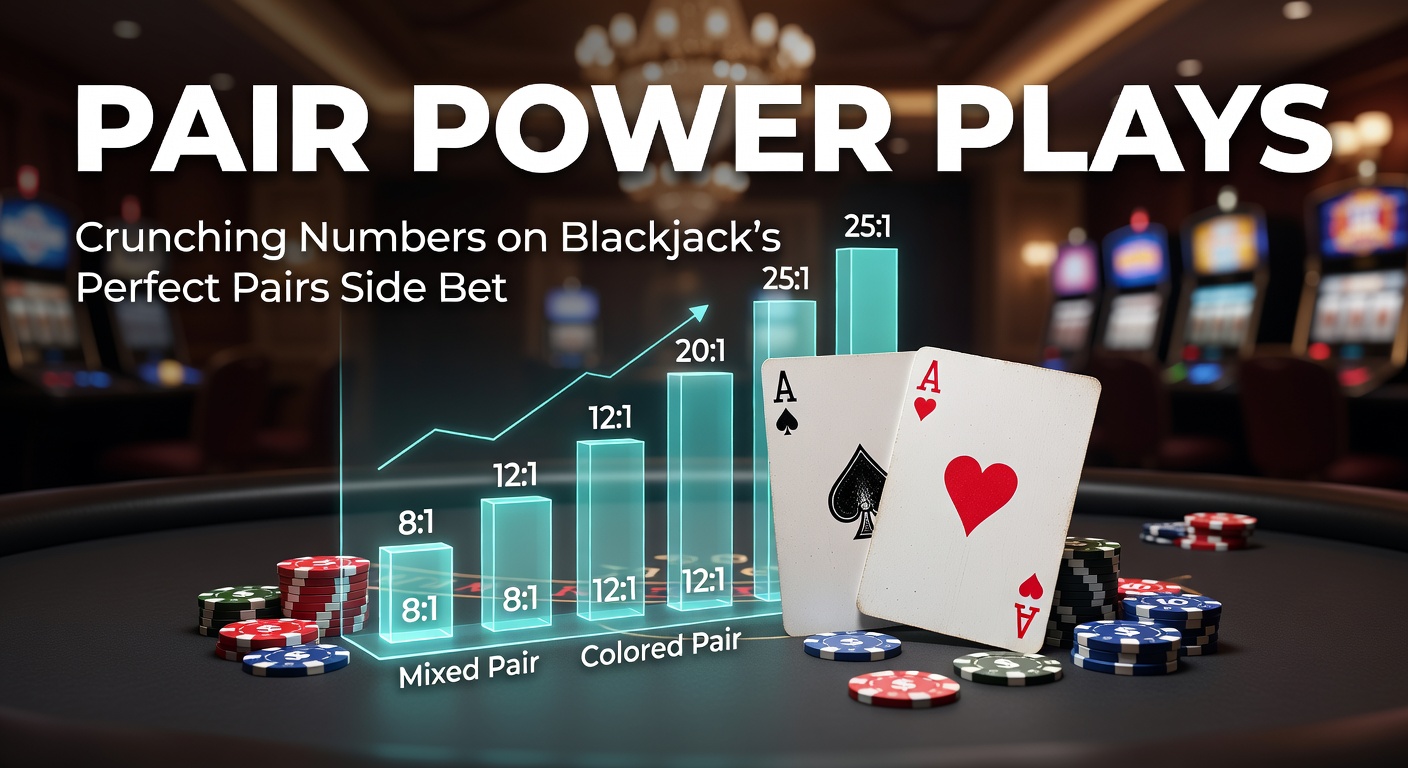
Standard configurations offer three tiers: a mixed pair (same rank, different suits and colors) pays 6 to 1; a suited pair in the same color but different suits hits 12 to 1; and the rare perfect pair—identical rank and suit—delivers 25 to 1, although some venues adjust these for better player returns like 30:1 on perfects or even 5:1 on mixed. Research from independent analysts, such as those at Wizard of Odds, calculates exact probabilities using combinatorial math over infinite decks to simulate real play.
Consider the numbers: in a six-deck shoe, the chance of any pair lands at about 4.8% per hand (one in 20.8 deals), breaking down to roughly 3.65% for mixed pairs, 1.12% for colored pairs, and a slim 0.045% for perfects; these figures shift marginally with fewer decks, where single-deck perfect pair odds climb to 0.088% because suited matches prove easier without depletion effects. Simulations run over millions of hands confirm expected values: for the common 6-12-25 structure, each unit wagered returns approximately 93.75 cents long-term, yielding a 6.25% house edge that edges higher in fewer decks due to variance spikes.
- Mixed pair probability: 3.65% (pays 6:1, contributes most wins but lowest multiplier)
- Colored pair: 1.12% (12:1 payout balances rarity and reward)
- Perfect pair: 0.045% (25:1 rarity makes it the jackpot chase)
But that's not all; side conditions like "suited" versus "same color" definitions matter, as some rules specify red-red or black-black for colored without requiring suit match, while others demand precise color alignment. Data indicates players hit mixed pairs most frequently, accounting for over 75% of winning bets, yet perfects drive the excitement (and those memorable stories players share).
House Edge Variations and Deck Impacts
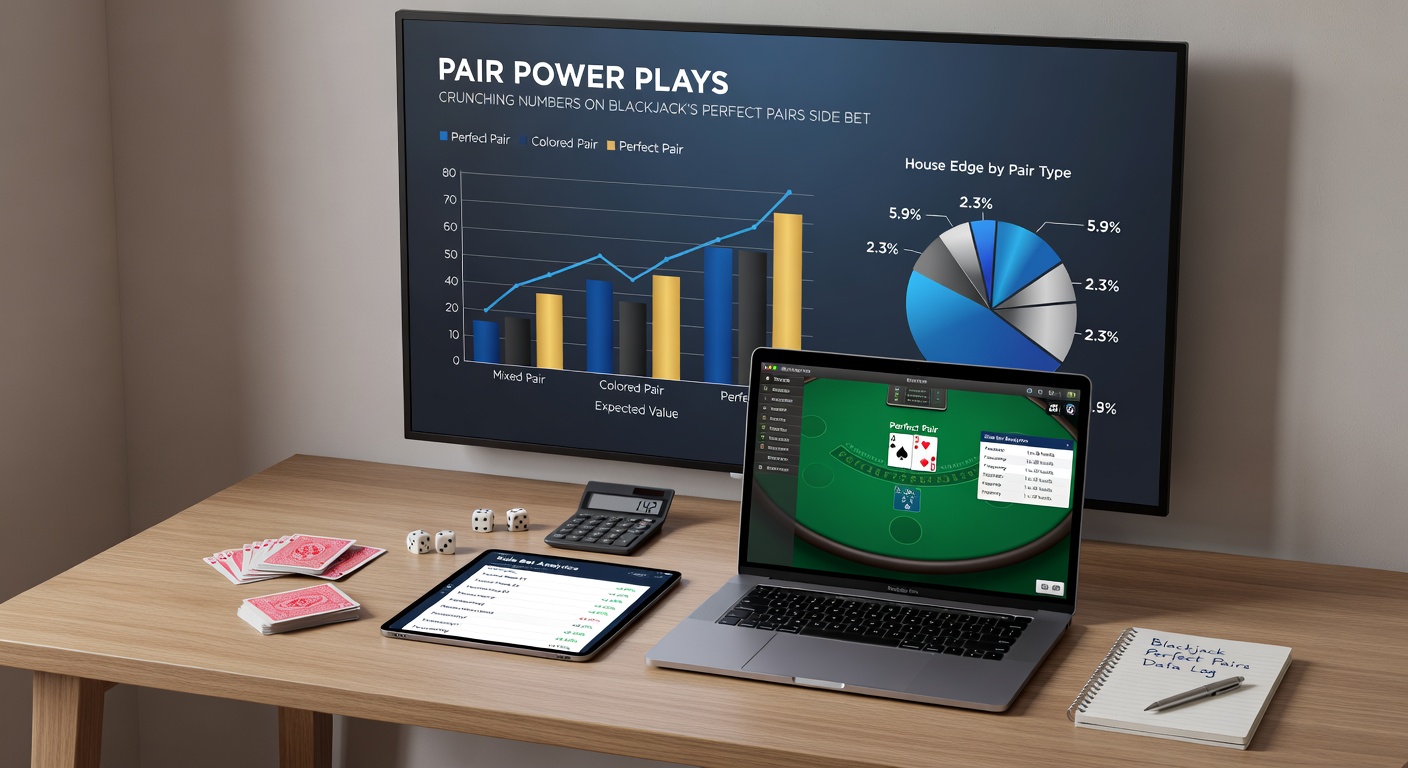
House edges fluctuate dramatically with rules; the baseline 6-12-25 setup clocks in at 5.23% for single-deck but jumps to 6.27% in eight-deck games because larger shoes dilute perfect pair chances through card spread. Tweaked payouts shift this: offering 5-10-30 drops the edge to 3.76% across six decks, a move some operators adopt to lure bets, while stingier 6-12-20 structures push it over 11%, turning the wager into a clear casino favorite. Figures from Gaming Laboratories International reports (focusing on North American certifications) reveal how regulators in places like Nevada mandate full disclosure of these edges, ensuring players see the math upfront.
What's significant is deck count's role; researchers who've modeled depletion effects find single-deck edges averaging 2.5% lower than multi-deck, although true single-deck blackjack remains rare outside high-limit rooms. And in continuous shuffling machines—now standard in many Vegas pits—the edge stabilizes near 6%, as fresh shuffles eliminate count-based advantages. Take one study where experts simulated 100 million hands: it exposed how early-shoe pairs cluster slightly more than late-shoe ones, a nuance that observant players track, albeit futilely for side bets since they resolve pre-hit.
| Payout (Mixed/Color/Perfect) | House Edge | Key Notes |
|---|---|---|
| 6-12-25 | 6.27% | Most common online/live |
| 5-10-30 | 3.76% | Player-friendly variant |
| 6-12-20 | 11.05% | Avoid if possible |
| 5.5-12-25 | 4.92% | Hybrid seen in Australia |
Real-World Data and Trends as of April 2026
April 2026 data from U.S. casino tracking firms like Eilers & Krejcik Gaming shows Perfect Pairs accounting for 15-20% of total side bet volume in blackjack pits, up from 12% two years prior, driven by its low minimums (often $1 alongside $10 main bets) that hook recreational crowds. Online platforms report even higher adoption; aggregator stats indicate it comprises 28% of side wagers in live dealer lobbies, where HD cams capture those perfect pair celebrations in real time. Yet, long-term play data underscores the grind: over 10,000-hand sessions, variance swings wildly—one player might bag five perfects in a hot streak (odds about 1 in 222 sessions), but the house edge erodes bankrolls steadily.
People who've tracked sessions often discover clustering illusions, where pair droughts feel eternal followed by mini-rushes, but simulations debunk streaks as pure randomness. Internationally, Australian operator reports (via the Australian Gambling Research Centre) note similar edges in their regulated markets, with 6-12-25 dominating Sydney tables; meanwhile, Canadian venues in Ontario favor 5-12-25 hybrids, shaving edges to 4.8% per provincial audits. This global patchwork means savvy observers hunt favorable rulesets, although side bets rarely correlate with main-hand strategy.
Now, emerging tech adds layers: AI-driven tables in Las Vegas trials (as of early 2026) flash real-time pair odds on screens, helping players gauge value, while VR blackjack apps simulate edges with customizable payouts for practice. Case in point: a Monte Carlo study last year revealed Perfect Pairs RTP dipping 0.2% in short-shoe ejections common to European wheels, a tweak that casinos leverage quietly.
Strategic Observations from the Numbers
Although Perfect Pairs operates independently—no basic strategy alters its odds—bankroll data suggests flat-betting it at 1-2% of total buy-in minimizes ruin risk, given its high variance (standard deviation around 4.5 units per hand). Experts who've run Kelly Criterion models find optimal sizing shrinks bets during cold streaks, yet most players ignore this, chasing the 25:1 allure. And that's where the rubber meets teh road: while main blackjack boasts sub-1% edges with perfect play, Perfect Pairs sits firmly in entertainment territory, best as a spice not the meal.
One notable case involved a Pittsburgh pit boss who tallied 18 months of logs: mixed pairs paid out 72% of wins as expected, but perfects arrived 1.2 times less frequently than modeled in eight-deck shoes, highlighting real-world friction from burns and cuts. Observers point out how promo overlays—like bonus multipliers on perfects during happy hours—can flip edges positive short-term, a tactic popping up in Atlantic City floors this spring.
Wrapping the Math: Key Takeaways on Perfect Pairs
In the end, crunching the numbers on Perfect Pairs reveals a side bet packed with punchy payouts amid probable losses, where 6-12-25 rules deliver consistent 6% edges across most setups, yet player-friendly variants offer better shots at prolonged play. Data underscores its role as a fun adder—probabilities fixed, variance high, and global tweaks keeping it fresh. Those diving into blackjack tables continue to place these wagers, balancing thrill against the house's built-in take, with April 2026 trends signaling even wider integration via tech and live streams. The ball's in the players' court to weigh the odds before circling up.