Session Data Patterns Highlight Evolving Blackjack Choices Among British Players
Ines Peters · Jul 24, 2026
Session Data Patterns Highlight Evolving Blackjack Choices Among British Players
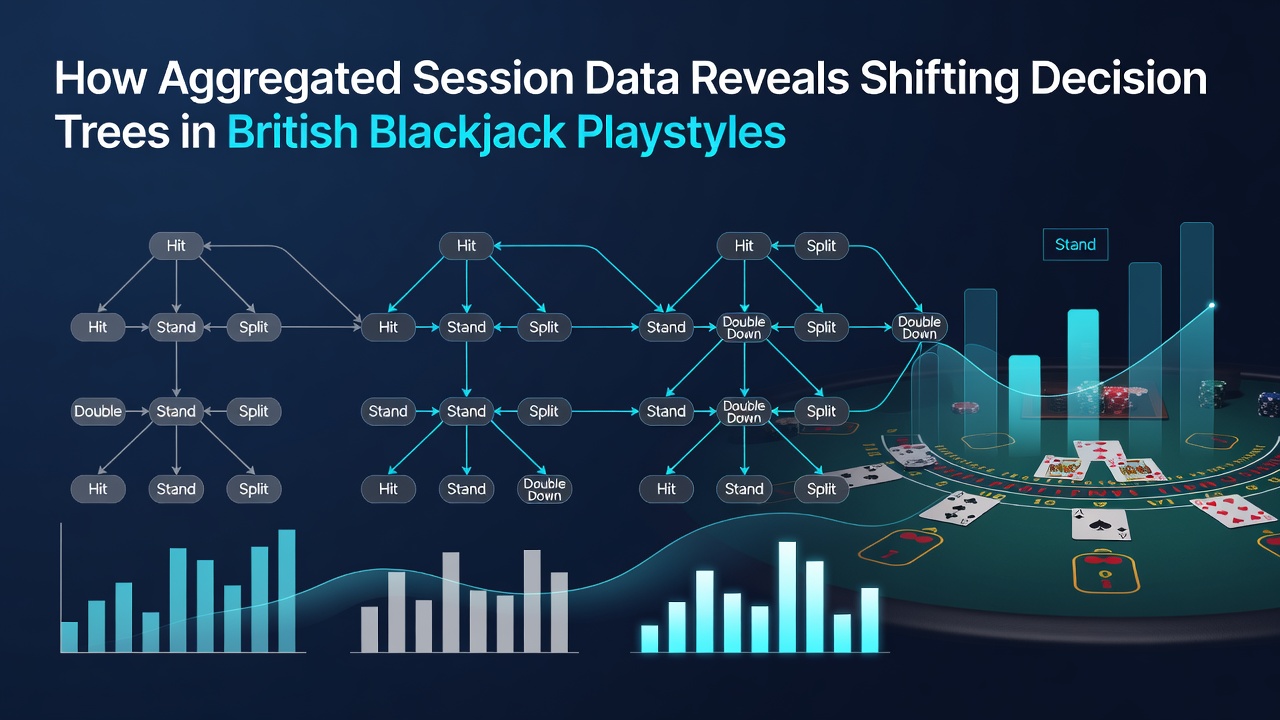
Analysts examining large volumes of session records from British online and live casino platforms have identified clear changes in how players approach common decision points during blackjack hands, with aggregated datasets revealing adjustments in hit, stand, double, and split choices across different time periods. These patterns emerge when researchers compile millions of individual decisions into structured decision trees that map player actions against dealer upcards and current hand totals, then compare results from earlier years against more recent collections running through July 2026.
Data Collection Methods Behind the Observed Shifts
Operators gather session information through platform logging systems that record every player action alongside contextual details such as table rules, stake levels, and session duration, after which third-party analysts aggregate the raw logs into usable formats for pattern detection. Studies conducted by independent research groups show that decision trees built from 2023 data differ from those constructed with 2025 and 2026 records in several key branches, particularly around soft totals and pairs where players now demonstrate increased willingness to deviate from traditional basic strategy recommendations in certain rule sets. One study revealed that British players at mid-stakes tables have increased doubling frequency on soft 18 against dealer 3 by measurable percentages when comparing pre-2024 sessions to later aggregates.
Key Decision Tree Branches Showing Change
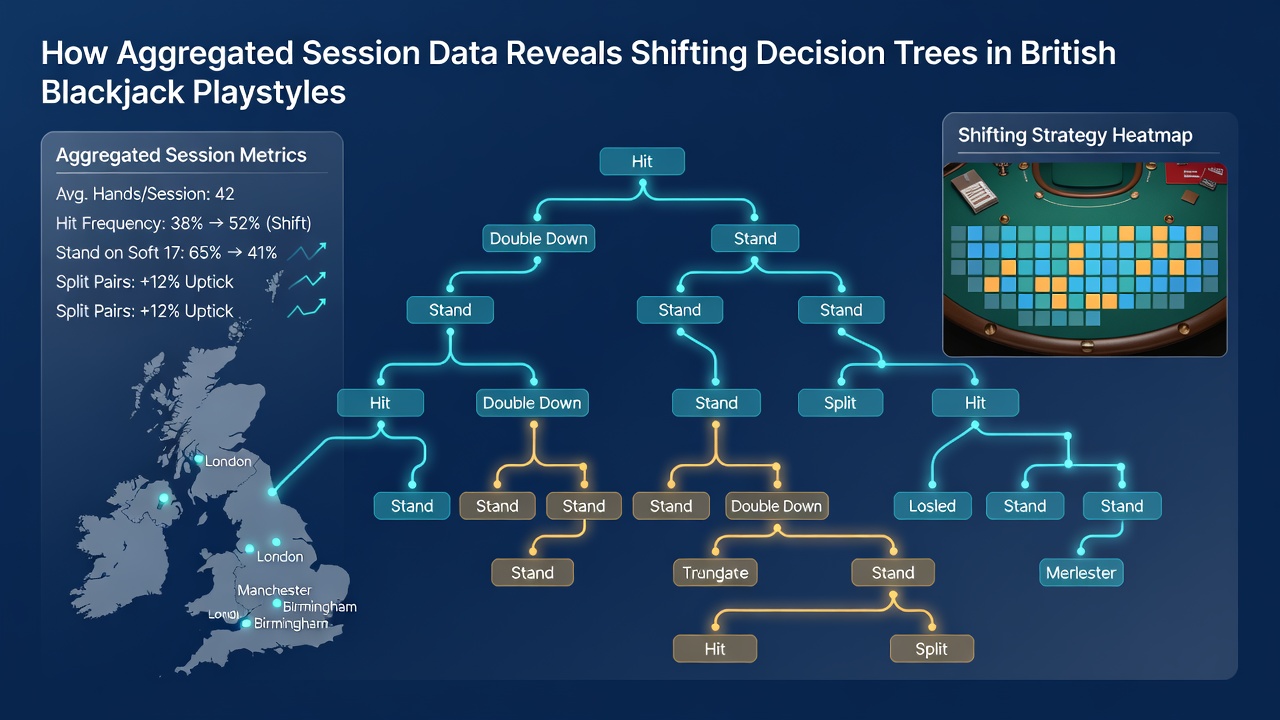
Decision trees function as visual maps that break down each possible hand state into recommended actions, and aggregated data allows observers to see where actual player behavior diverges from these maps over time. Researchers note several consistent movements: players appear less likely to surrender late when the option exists, while showing greater tendency to split certain pairs such as 9s against weak dealer cards. These shifts appear across multiple operators and persist even after controlling for changes in available game variants, suggesting broader influences from exposure to live dealer streams or updated strategy tools distributed through player communities.
What's interesting is how the data further separates outcomes by session length, with shorter sessions displaying more conservative trees and longer sessions revealing increased aggression in doubling and splitting branches. Figures from industry reports indicate that sessions exceeding 150 hands exhibit decision patterns that diverge most noticeably from standard charts, particularly in the treatment of hard 16 against dealer 10.
Influences on Strategy Adjustments
Multiple factors contribute to these evolving patterns, including exposure to new game formats such as infinite blackjack variants that alter card sharing dynamics, and the availability of real-time strategy aids that some platforms integrate directly into interfaces. According to research published in the Journal of Gambling Studies, players who combine live dealer sessions with RNG tables demonstrate hybrid decision trees that blend elements from both environments, leading to measurable departures from single-format basic strategy. Data collected through mid-2026 shows these hybrid patterns becoming more common among British participants who frequent both formats within the same week.
Regulatory environments outside the UK also provide comparative context, with data from the Nevada Gaming Control Board illustrating similar movement in player choices when new side bet options enter the market. Observers note that British trends align with international patterns in some branches yet diverge in others, particularly around pair splitting where local rule preferences create distinct clusters in the aggregated trees.
Comparative Analysis Across Player Segments
When researchers segment the data by stake level and session frequency, distinct sub-trees emerge that reflect different adaptation rates. High-frequency players show faster incorporation of new decision branches compared with occasional participants, whose trees remain closer to classic basic strategy across the examined periods. A report from the Australian Institute of Family Studies highlights parallel segmentation in other markets, where frequent players adjust more readily to rule variations and new table formats.
Session data also captures timing elements, such as whether decisions occur early or late in a session, and these temporal markers help explain why some branches shift while others remain stable. Aggregated records indicate that fatigue-related deviations concentrate around specific hand states like hard 15 and 16, where players increasingly choose to hit rather than stand as sessions progress beyond certain hand counts.
Conclusion
Aggregated session data continues to provide detailed maps of how British blackjack decision trees evolve, with documented shifts appearing across multiple hand states and player segments through July 2026. These patterns emerge from systematic collection and analysis rather than isolated observations, offering concrete evidence of changing playstyles as new formats and tools enter the market. Continued monitoring of such datasets will likely reveal further refinements in the branches that define player choices at each decision point.