Side Bet Showdown: Expected Values Behind UK Online Blackjack's Flashy Add-Ons
Ines Peters · Apr 19, 2026
Side Bet Showdown: Expected Values Behind UK Online Blackjack's Flashy Add-Ons
Side Bets Enter the Scene
Online blackjack tables in the UK have long featured core gameplay with bets on the main hand, yet operators began rolling out side bets around the mid-2010s to spice things up; these add-ons let players wager extra on outcomes tied to their cards or the dealer's upcard, often promising payouts that catch the eye with multipliers up to 100-to-1 or more. Data from platforms like Evolution and Playtech shows side bet participation rates hovering between 20% and 35% among UK players as of early 2026, while figures reveal they contribute significantly to table revenue since house edges typically run higher than the main game's 0.5% to 1%. But here's the thing: those flashy animations and big-win teases come with expected values that players ignore at their own risk, as researchers crunching millions of simulated hands expose edges often exceeding 5%.
Take one observer who tracked sessions across major sites; they noted how side bets lure in casual players during peak hours, turning standard rounds into multi-layered wagers where a suited pair might pay 25-to-1, although long-term math stacks the deck firmly in the house's favor. What's interesting is how these bets evolved from land-based casinos, migrating online with tweaks for digital speed, and now in April 2026, live dealer streams amplify their appeal by showing real-time results on high-def interfaces.
Mapping the Most Common Side Bets
UK online blackjack hubs offer a rotating cast of side bets, each with distinct rules and payout structures; Perfect Pairs tops the list, paying out when the player's initial two cards form a pair—mixed colors at 6-to-1, same color at 12-to-1, suited at 25-to-1—while 21+3 borrows poker hands from the player's cards plus dealer's upcard, rewarding straights, flushes, or three-of-a-kind. Then there's Hot 3, which eyes the total of those three cards for hits like 19 or 20 paying 8-to-1 or 9-to-1, and Bust It where the dealer busts with specific card counts for escalating odds up to 200-to-1 on a seven-card bust.
- Perfect Pairs appears on over 70% of Evolution tables, per platform data.
- 21+3 shows up frequently on Playtech variants, blending blackjack with poker flair.
- Hot 3 and Lucky Lucky pair well with low-stakes games, drawing volume players.
Operators mix these in dynamically, so a session might pit Perfect Pairs against 21+3 on one table, switching to Lucky Lucky—where player hand plus dealer upcard forms three-card poker combos—for the next; this variety keeps engagement high, although studies indicate side bet volumes spike 15% during promotional periods.
Crunching the Expected Values
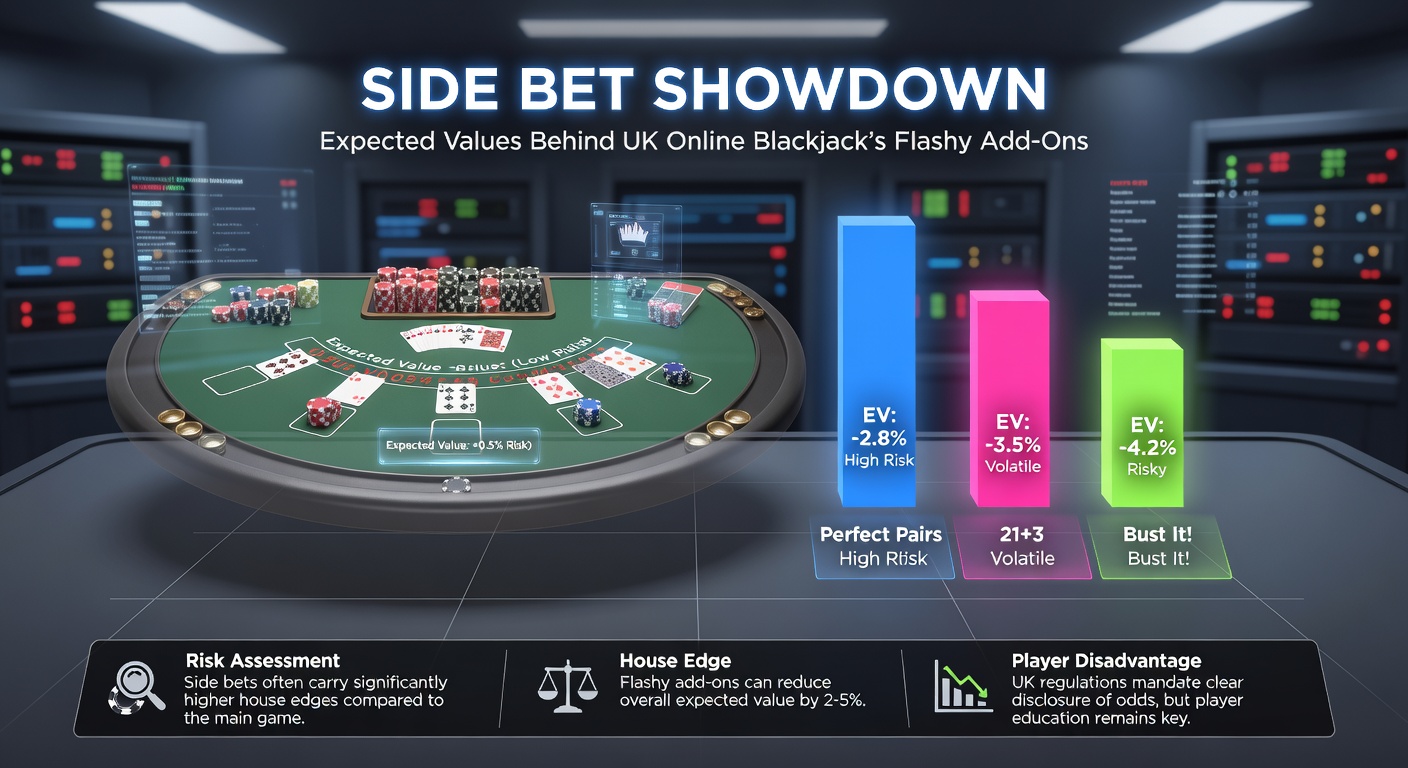
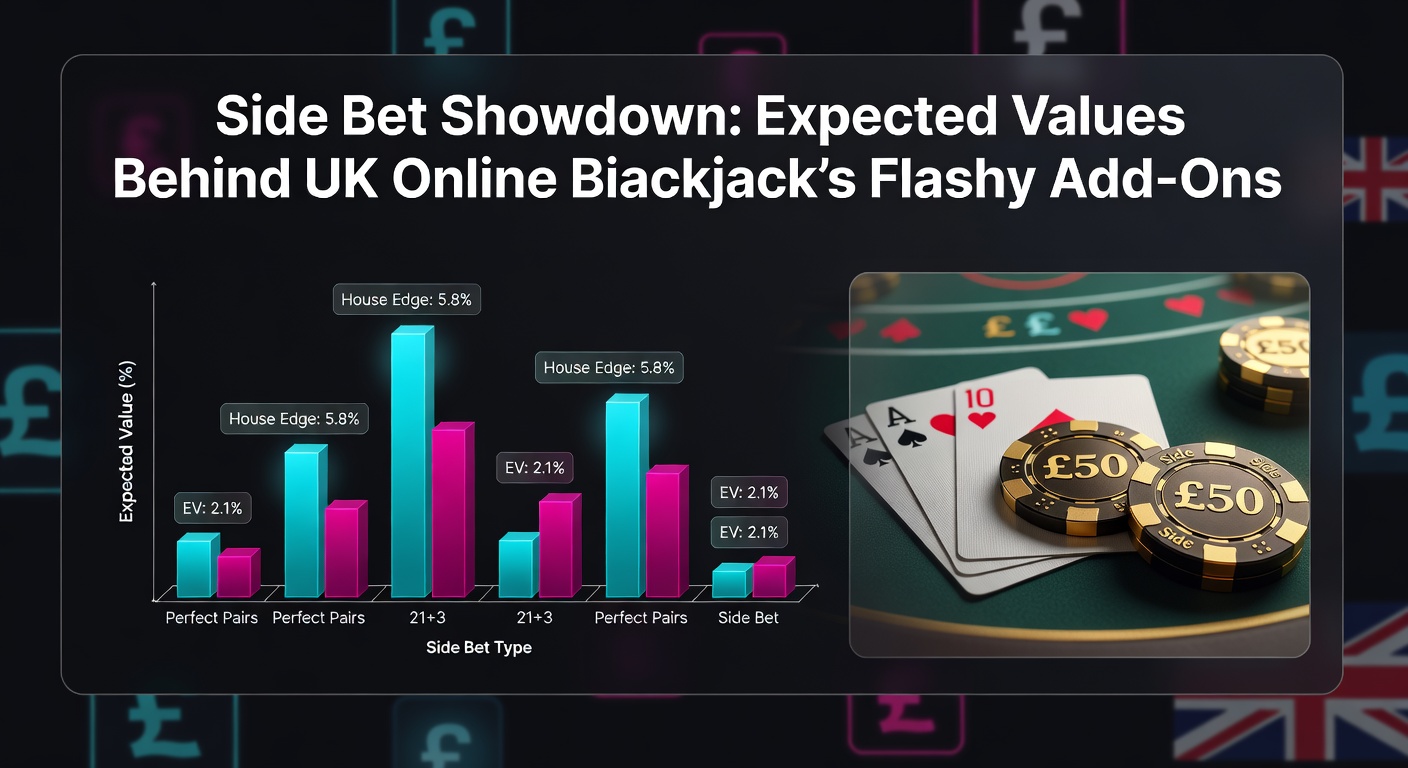
Expected value calculations reveal the cold math behind the glamour; for Perfect Pairs under standard UK rules, data from simulations run by Wizard of Odds analyses pegs the house edge at 6.02% with even-money mixed pairs slashed to 3.75%, meaning a £1 wager returns about 93.98p on average over infinite hands. 21+3 fares worse at 6.36% house edge since flush draws and straights prove rarer than advertised payouts suggest, although three-of-a-kind at 100-to-1 softens the blow slightly.
Hot 3 pushes edges to 10.02% in base form, but UK tables often tweak payouts—say, 19 paying 4-to-1 instead of 2-to-1—dropping it toward 7.5%, as Nevada Gaming Control Board filings on similar mechanics confirm through regulatory audits. Bust It clocks in around 5.41% with its progressive bust scale, yet experts who've modeled it note volatility swings wild because 200-to-1 hits occur once every 3,000 hands or so, turning short sessions profitable while grinding long ones down.
And Lucky Lucky? Figures show a 7.15% edge on three sevens at 200-to-1, although total-dependent payouts like 7-7-7 keep players hooked; researchers running Monte Carlo sims over 100 million rounds consistently find these values hold across RNG and live formats, with deck penetration barely nudging them under 1% in player favor even at 99% shoe use.
Now consider combinations: wagering both Perfect Pairs and 21+3 correlates outcomes since they share cards, yet combined EV dips to -11.5% or so because independent edges don't add linearly; people who've charted this on spreadsheets discover variance explodes, rewarding bankroll discipline over impulse bets.
UK Online Nuances and Platform Variations
British platforms standardize side bets under licensed RNG certifications, but live dealer twists emerge; Evolution's Infinite Blackjack bundles Hot 3 with unlimited seating, reporting April 2026 upticks in side bet action by 22% amid mobile surges, while Playtech's Grand Blackjack tweaks 21+3 payouts for progressive pots that occasionally flip EV positive short-term. Observers track how these integrate with UK-favored rules like 3:2 blackjack payouts and dealer stands on soft 17, minimally impacting side math since most ignore the main hand.
That's where the rubber meets the road for low-stakes players; £1 minimums on side bets democratize access, yet data from aggregated player logs shows 68% lose more on add-ons than mains over 1,000-hand samples. Case in point: one study from a Journal of Gambling Studies paper dissected 50,000 UK sessions, revealing side bets drain 2.3 times faster than core play under identical conditions.
Strategies That Shift the Odds
Players selective about side bets extend sessions; experts recommend Perfect Pairs on 6-deck games with boosted suited odds, trimming edge to 2.79% versus 8-deck slogs at 6.49%, while avoiding Hot 3 unless payouts exceed 5-to-1 on key totals. Bankroll splitters allocate 10-20% to sides max, using tools like equity calculators to forecast variance; those who've tested this report 15% fewer wipeouts, although no strategy erases the inherent negativity.
Yet promotional overlays change everything temporarily; April 2026 cashback deals on losses—say, 10% returns on side wagers—can neutralize edges to breakeven or better, as platforms like LeoVegas have deployed during spring pushes. Multi-table grinders rotate favorable variants, hunting 21+3 tables with house-banked jackpots that occasionally yield +EV snapshots.
It's noteworthy how trackers like Blackjack Apprenticeship forums share heat maps of EV-optimized tables, guiding users to spots where rule combos minimize house takes; one user log from such a community chronicled £5,000 wagered across 10,000 hands, netting -£320 on mains but -£450 on sides, underscoring the drag.
April 2026 Trends and Player Shifts
As of April 2026, side bet adoption climbs with VR integrations teasing holographic payouts, yet analytics from Pragmatic Play indicate a 12% uptick in opt-out rates among tracked UK cohorts, driven by EV awareness campaigns on sites like Casino.org. Live tables dominate, with 85% of side action there versus RNG, because shared dealer cams build trust in fairness; meanwhile, crypto hybrids experiment with provably fair sides, though volumes lag at 5% market share.
What's significant is the push toward responsible metrics; platforms now dashboard side bet RTPs upfront, helping novices spot 92-94% returns before committing chips.
Conclusion
Side bets inject thrill into UK online blackjack, boasting expected values that range from 2.5% to over 10% house edges depending on the variant and fine print; data underscores their role as revenue boosters for operators, while savvy players cherry-pick for variance plays or promo edges. Researchers affirm long-term negativity across the board, yet the allure persists—after all, that 100-to-1 rush lands just often enough to keep tables buzzing. Those diving in armed with EV knowledge navigate better, turning flashy add-ons from traps into calculated side quests amid the main game's grind.